
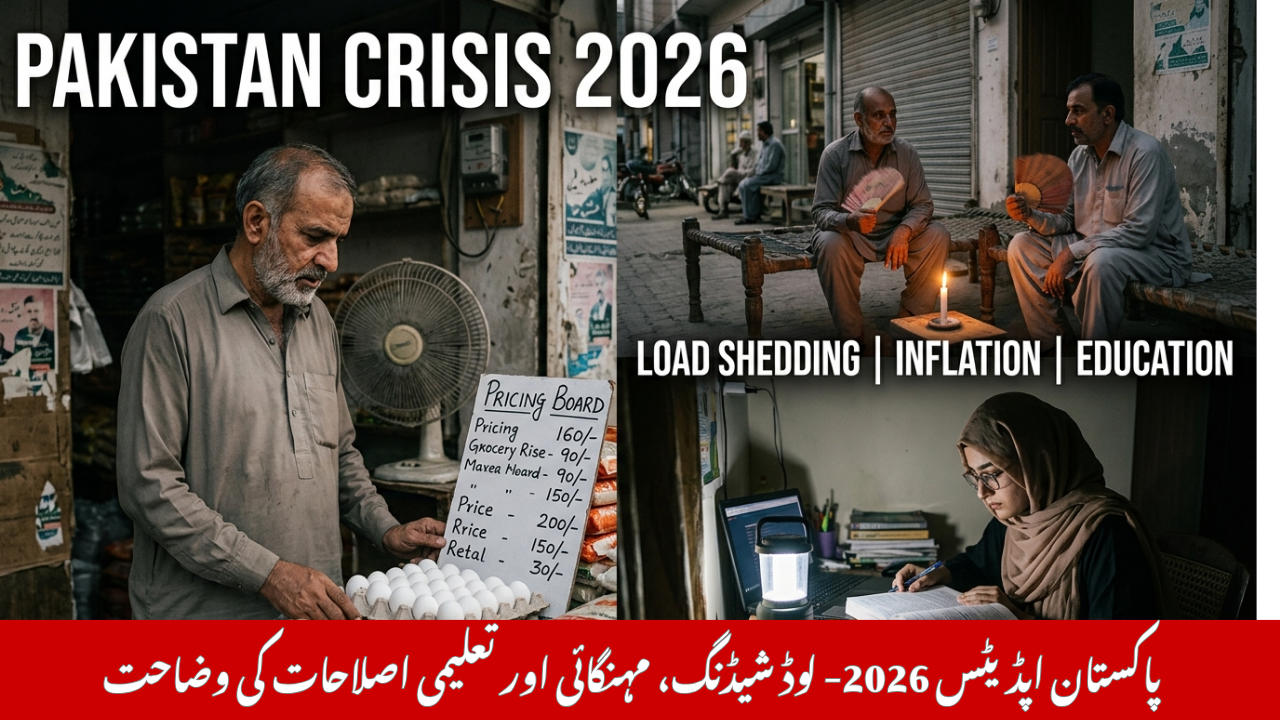
🇵🇰 Pakistan Updates 2026: Load Shedding, Inflation Crisis & Education Reforms Explained
Pakistan is currently navigating through a complex mix of economic pressure, energy shortages, and structural reforms. These issues are directly affecting millions of citizens across the country. From increasing electricity load shedding to rising inflation and ongoing education reforms, understanding these updates is crucial for staying informed and prepared.
Also read:
Pakistan Cricket Big Changes 2026-New Captain, Coaching Staff & Bangladesh Tour SquadSS
Electricity Load Shedding Concerns
Across Pakistan, electricity load shedding is expected to intensify as summer temperatures rise. The demand for electricity increases significantly due to excessive use of cooling appliances such as fans, air conditioners, and refrigerators.
However, the country’s power generation capacity is struggling to keep up with this demand. Fuel shortages, circular debt, and outdated infrastructure are some of the main reasons behind this ongoing crisis. Many urban and rural areas may face prolonged outages, especially during peak hours.
Load shedding not only disrupts daily life but also impacts businesses, factories, and small enterprises. This ultimately slows down economic productivity and creates additional financial pressure on households.
Petrol Prices & Inflation Outlook
While there has been a slight reduction in diesel prices recently, inflation in Pakistan remains a major concern. The prices of essential commodities such as flour, sugar, vegetables, electricity, and gas continue to rise.
The government is trying to manage the situation by adjusting fuel prices and negotiating with international financial institutions. However, global oil price fluctuations and the weakening of the local currency are making it difficult to provide long-term relief.
For ordinary citizens, this means higher living expenses and reduced purchasing power. Many families are struggling to maintain their standard of living. Budgeting, cutting unnecessary expenses, and energy conservation have become necessary survival strategies.
Additionally, inflation is affecting multiple sectors including transportation, manufacturing, and retail, making it a widespread economic challenge.
Education Reforms Under Discussion
The education sector in Pakistan is also undergoing significant discussions regarding reforms. The government aims to modernize the system by introducing digital learning platforms and updating the national curriculum.
Key objectives of these reforms include:
- Improving the quality of education
- Promoting digital literacy among students
- Reducing the gap between public and private education systems
- Aligning Pakistan’s education standards with global benchmarks
If these reforms are implemented effectively, they could bring long-term benefits to students and the overall economy. However, challenges such as lack of infrastructure, teacher training, and funding must be addressed.
Digital education, in particular, has the potential to revolutionize learning in remote and underdeveloped areas where access to quality education is limited.
Economic & Social Impact
These issues are deeply interconnected. Energy shortages reduce industrial output, inflation increases financial stress, and weak education systems affect long-term national growth.
The combined impact of these challenges is being felt across all segments of society. Low-income families are the most affected, while businesses face uncertainty due to fluctuating costs and inconsistent power supply.
At the same time, reforms in education offer hope for future improvement. A skilled and educated workforce can help Pakistan overcome economic difficulties in the long run.
FAQs (Frequently Asked Questions)
1. Why is load shedding increasing in Pakistan?
Due to high electricity demand and limited power generation.
2. Will power outages continue in the future?
Yes, especially during summer months.
3. Are petrol prices stable now?
No, they are still subject to global market changes.
4. Why is inflation still rising?
Because of increased utility costs and economic instability.
5. Which sectors are most affected by inflation?
Food, energy, transport, and housing.
6. What are the main goals of education reforms?
To improve quality and introduce digital learning.
7. Will these reforms benefit rural areas?
Yes, especially through online education access.
8. How can citizens cope with inflation?
By budgeting and reducing unnecessary spending.
9. Is the government addressing energy issues?
Yes, but progress is gradual.
10. Where can I find official updates?
Visit the official government website below.
Official Website
For authentic and updated information, visit:
https://www.pakistan.gov.pk
FOLLOW UPS FOR MORE UPDATES:
Whatsapp:
https://whatsapp.com/channel/0029Vb7bBGqGpLHYH9ZEnU3H
Conclusion / Disclaimer
Pakistan is currently facing significant economic and structural challenges. Electricity shortages, rising inflation, and education reforms are shaping the country’s present and future. While the situation is difficult, ongoing efforts and policy changes may bring gradual improvements over time.
Disclaimer: This article is for informational purposes only. Data and updates may change, so always refer to official sources for confirmation.
1 thought on “Pakistan Updates 2026- Load Shedding, Inflation & Education Reforms Explained”