
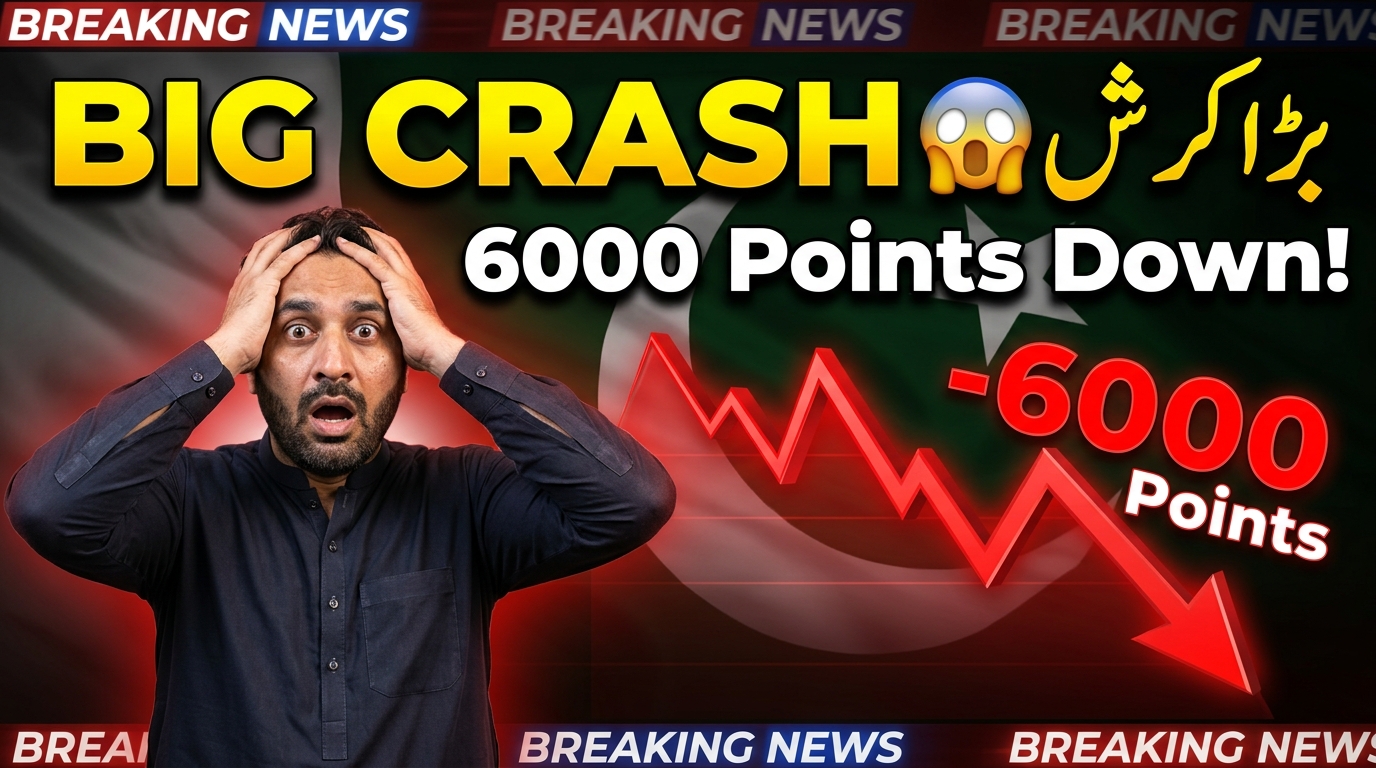
Pakistan Stock Market Crash – KSE-100 Sees Massive 6,000-Point Drop
The Pakistan Stock Exchange witnessed a dramatic and alarming سقوط (crash) as the benchmark KSE-100 Index plunged nearly 6,000 points in a single trading session. This sudden downturn has sent shockwaves across the financial community, triggering widespread panic among investors and raising serious concerns about the country’s economic stability.
Also read:
PSL vs IPL Statement 2026_Mohsin Naqvi Big Claim on PSL Future
Market Shock and Investor Panic
The crash unfolded rapidly, catching both institutional and retail investors off guard. Within hours of market opening, heavy selling pressure intensified, leading to one of the steepest single-day declines in recent history. Investors rushed to offload their holdings, fearing further losses, which only accelerated the downward spiral.
Market analysts suggest that this sharp decline reflects a combination of internal economic fragility and external geopolitical tensions. Panic selling dominated the trading floor as confidence weakened and uncertainty took over rational investment decisions.
US–Iran Tensions: A Key Trigger
One of the major factors behind this crash is the recent collapse of talks between the United States and Iran. These negotiations were being closely monitored worldwide, as any instability in the Middle East directly impacts global oil markets and investor sentiment.
Pakistan, being an import-dependent economy, is particularly vulnerable to fluctuations in oil prices. The failure of these talks has raised fears of potential conflict or sanctions escalation, which could drive energy prices higher. This, in turn, would increase inflationary pressure in Pakistan and negatively affect corporate profitability—prompting investors to exit the market.
Economic Uncertainty on the Rise
Beyond geopolitical concerns, Pakistan’s domestic economic challenges have also contributed to the market decline. Rising inflation, currency depreciation, and ongoing negotiations with international financial institutions have created an environment of uncertainty.
Investors are increasingly worried about:
- Interest rate fluctuations
- Rupee instability
- Fiscal deficit concerns
- Delays in economic reforms
Such factors reduce investor confidence and discourage long-term investment strategies. Instead, market participants prefer short-term exits, further weakening the stock market.
Sector-Wise Impact
The crash was not limited to a single sector; rather, it affected nearly all major industries. Banking stocks, energy companies, and cement sectors faced heavy losses. Blue-chip companies, which are typically considered stable, also saw significant declines—indicating the severity of the situation.
This broad-based fall suggests that the issue is systemic rather than isolated. When even fundamentally strong companies experience sharp drops, it signals deep-rooted market fear.
What Experts Are Saying
Financial experts believe that while the drop is severe, it may not be entirely unexpected given the current global and local conditions. Some analysts view this correction as a temporary reaction to external shocks, while others warn of prolonged volatility if uncertainties persist.
According to market strategists, stability may return if:
- Diplomatic tensions ease
- Government introduces strong economic policies
- Investor confidence is restored through reforms
However, without these improvements, the market could remain under pressure in the coming weeks.
Opportunities Amid Crisis?
Interestingly, some seasoned investors see this crash as a potential buying opportunity. Historically, sharp market declines have often been followed by recovery phases. Long-term investors with strong risk tolerance may consider entering the market at lower valuations.
However, such decisions require careful analysis and should not be driven by speculation. Timing the market during uncertainty can be risky, especially for inexperienced investors.
Conclusion
The recent سقوط of the Pakistan Stock Exchange serves as a stark reminder of how interconnected global politics and local economies have become. A single geopolitical event can trigger widespread financial consequences, especially in emerging markets like Pakistan.
While the current situation is concerning, it also highlights the importance of strong economic policies, investor confidence, and geopolitical stability. Moving forward, both government action and international developments will play a crucial role in determining the market’s direction.
Professional Reference Link
For official market updates and live data, visit:
👉 https://www.psx.com.pk
Frequently Asked Questions (FAQs)
Q1: Why did the Pakistan stock market crash?
The crash was mainly triggered by geopolitical tensions (US–Iran talks failure) and domestic economic uncertainty.
Q2: How much did KSE-100 fall?
The KSE-100 Index dropped approximately 6,000 points in a single day.
Q3: Is this a good time to invest?
It depends on your risk tolerance. Long-term investors may find opportunities, but caution is advised.
Q4: Which sectors were most affected?
Banking, energy, and cement sectors experienced major losses.
Q5: Will the market recover?
Recovery depends on political stability, economic reforms, and investor confidence.
Disclaimer
This article is for informational and educational purposes only and does not constitute financial or investment advice. Stock market investments are subject to market risks, and past performance is not indicative of future results. Readers are advised to conduct their own research or consult with a qualified financial advisor before making any investment decisions.