
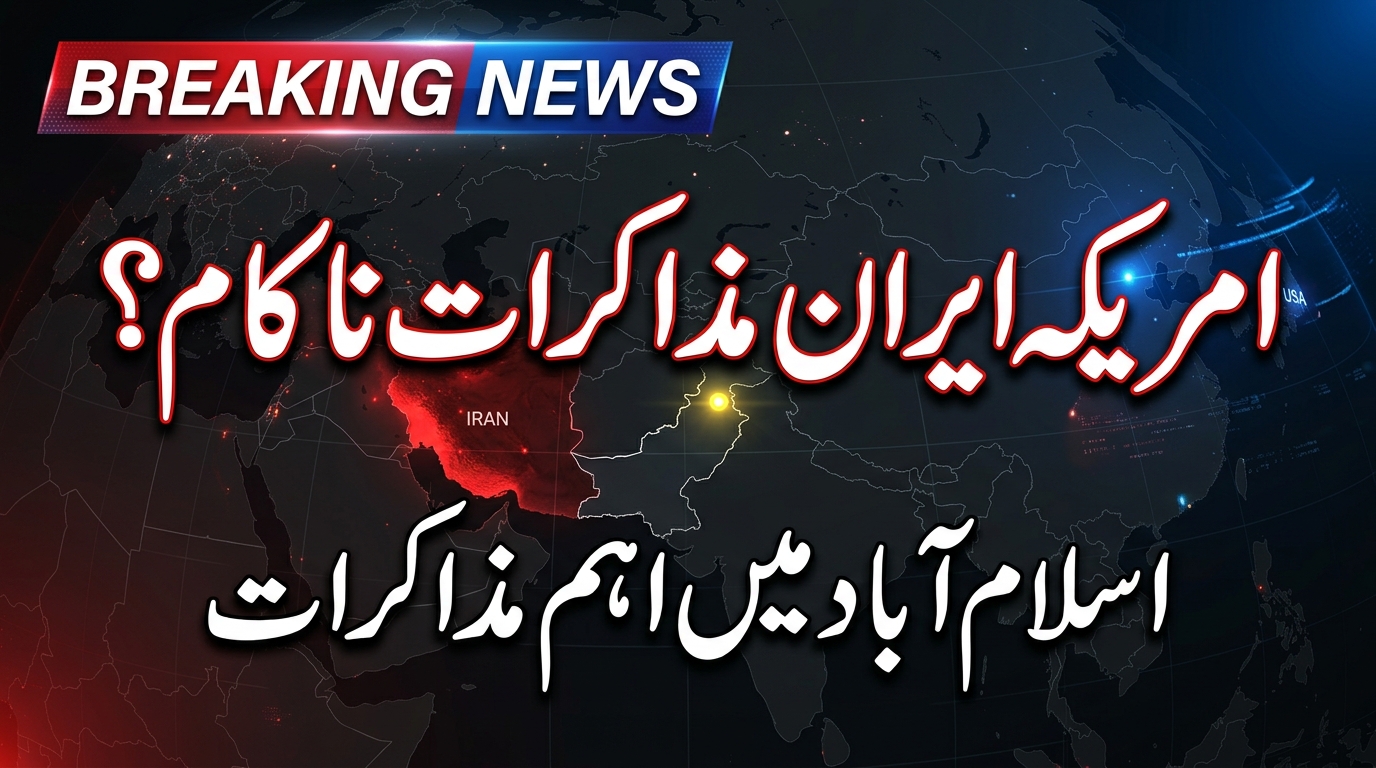
US–Iran Talks in Pakistan: A Critical Diplomatic Moment Without Breakthrough
In a significant development that has captured global attention, high-level negotiations between the United States and Iran were recently held in Islamabad, positioning Pakistan at the center of international diplomacy. These talks, aimed at easing long-standing tensions between the two nations, concluded without a final agreement. While some reports have described the outcome as a “failure,” the reality is more nuanced, reflecting the complexity of global geopolitics.
Also read:
Islamabad Security 2026: Extreme Measures During US-Iran Talks in Pakistan
Background of the Talks
The relationship between the United States and Iran has remained strained for decades, largely due to disagreements over nuclear development, economic sanctions, and regional influence in the Middle East. Efforts to bring both sides to the negotiation table have been ongoing, but direct high-level discussions have been rare in recent years.
Pakistan’s role as a host for these talks marks a notable diplomatic achievement. By facilitating dialogue between two historically adversarial nations, Pakistan demonstrated its growing importance as a neutral ground for sensitive international negotiations. The choice of Islamabad as the venue reflects confidence in Pakistan’s ability to provide a secure and politically balanced environment.
What Happened During the Negotiations
According to diplomatic sources, the talks involved detailed discussions on key issues such as Iran’s nuclear program, sanctions imposed by the United States, and broader regional stability concerns. Both sides reportedly presented firm positions, making it difficult to reach a compromise.
Officials from the United States emphasized the need for stricter compliance and transparency from Iran regarding its nuclear activities. On the other hand, Iran insisted on the removal of economic sanctions as a prerequisite for any meaningful agreement. This fundamental difference in priorities created a deadlock, preventing the negotiations from reaching a conclusive outcome.
Despite the absence of a formal agreement, the talks themselves are being viewed as a positive step toward reopening communication channels between the two nations.
Why the Talks Did Not Lead to an Agreement
It is important to understand that international negotiations of this scale rarely result in immediate success. The lack of a breakthrough in Islamabad does not necessarily indicate failure but rather highlights the depth of the issues involved.
Several factors contributed to the outcome:
- Diverging Strategic Interests: Both countries have conflicting objectives in the region, making compromise challenging.
- Nuclear Policy Disputes: Iran’s nuclear ambitions remain a central point of contention.
- Economic Sanctions: Iran continues to demand relief from sanctions, while the United States seeks guarantees before offering concessions.
- Trust Deficit: Years of political tension have created a lack of trust, complicating negotiations.
These factors combined to create a situation where progress was limited, despite extended discussions.
Global Impact and Why This Is Trending
The talks have gained widespread global attention because of their potential implications for international stability. Relations between the United States and Iran have a direct impact on the Middle East, global security, and energy markets.
One of the most immediate concerns is the effect on global oil prices. Any escalation in tensions could disrupt supply chains, leading to increased energy costs worldwide. Additionally, the outcome of such negotiations influences diplomatic strategies across multiple regions.
This is why the news has been trending globally. The involvement of Pakistan as a host nation further adds to the significance, as it highlights the country’s evolving role in global affairs.
Pakistan’s Role in Global Diplomacy
Pakistan’s involvement in facilitating these talks is being seen as a major diplomatic milestone. By providing a platform for dialogue, Pakistan has reinforced its position as a mediator capable of handling sensitive international issues.
Hosting such high-level discussions requires not only logistical preparedness but also political neutrality and strategic credibility. Pakistan’s ability to bring both parties to the table reflects its strengthening diplomatic ties and growing influence in international relations.
This development may open doors for Pakistan to play a more active role in future global negotiations.
Conclusion
While the recent US–Iran talks in Islamabad did not result in a final agreement, they represent an important step toward dialogue and potential conflict resolution. Labeling the outcome as a complete failure would overlook the significance of renewed engagement between the two nations.
The discussions underscore the complexity of international diplomacy, where progress is often gradual and requires sustained effort. As global tensions continue to evolve, such initiatives remain crucial in maintaining communication and preventing escalation.
Pakistan’s role as a host further emphasizes its importance on the global stage, marking a shift toward greater involvement in international peace efforts.
Professional Source Link
For more detailed coverage, you can refer to this report:
🔗 Reuters – US–Iran Talks in Pakistan: https://www.reuters.com/world/asia-pacific/pakistani-five-star-hotel-becomes-unlikely-site-us-iran-talks-2026-04-11/
Frequently Asked Questions (FAQs)
1. Did the US–Iran talks in Pakistan completely fail?
No, the talks did not result in a final agreement, but they helped reopen communication between both countries.
2. Why were the talks held in Pakistan?
Pakistan acted as a neutral host, providing a secure and balanced environment for negotiations.
3. What were the main issues discussed?
Key topics included Iran’s nuclear program, US economic sanctions, and regional stability.
4. Why is this news trending globally?
Because it impacts global politics, Middle East stability, and oil prices.
5. Will there be more talks in the future?
Diplomatic sources suggest that further negotiations are possible, although no official timeline has been confirmed.
Disclaimer
This article is based on publicly available information and international media reports. Diplomatic developments are subject to change, and some details may evolve as official statements are released. The purpose of this content is informational only and should not be considered as definitive political analysis or policy guidance.