
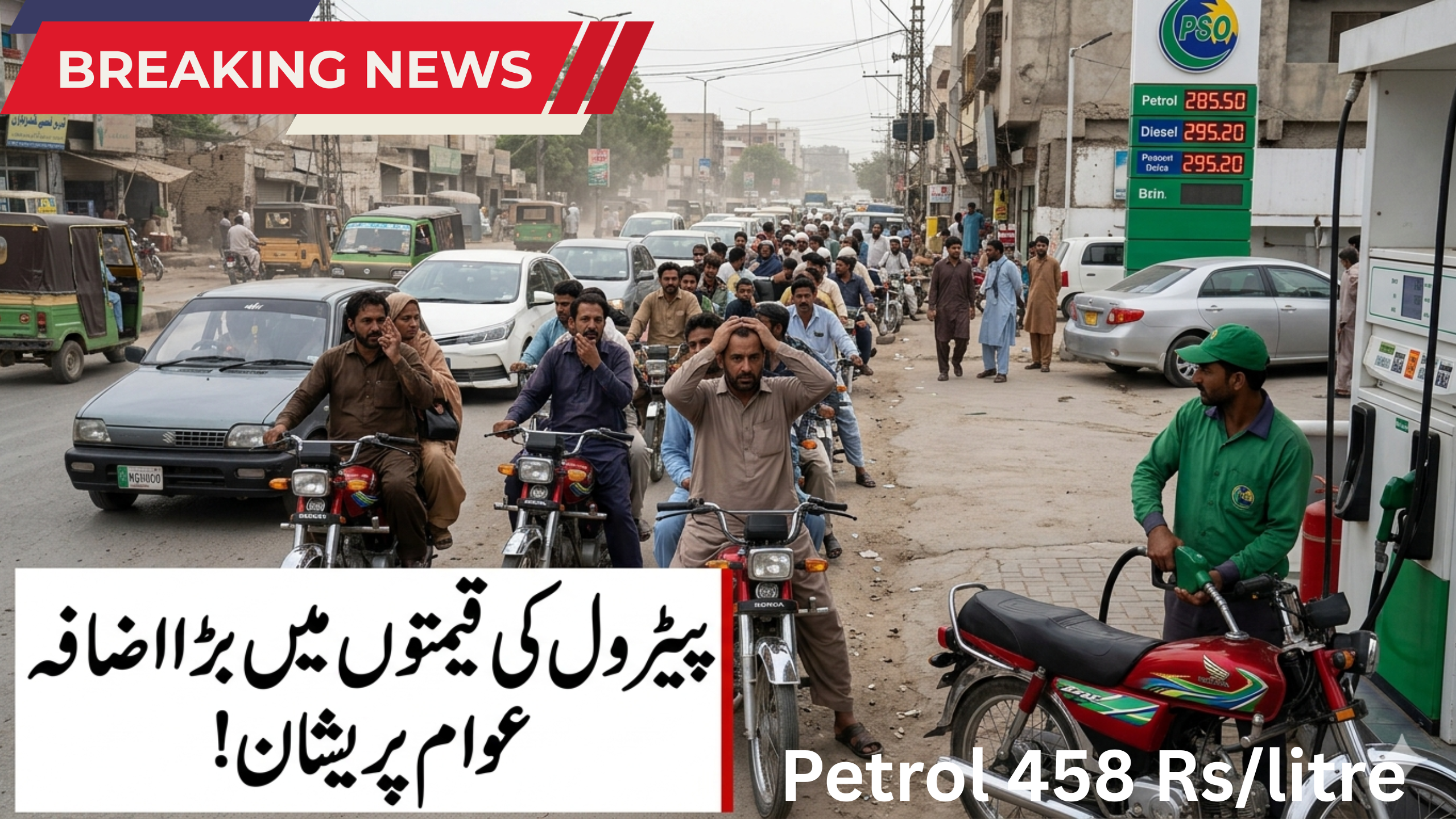
Petrol Price Shock in Pakistan: A Growing Economic Crisis
Petrol price in Pakistan has reached an all-time high, with petrol now at Rs. 458 per litre and diesel at Rs. 520 per litre. This surge is a direct result of the ongoing global oil crisis caused by conflict in the Middle East. Citizens, businesses, and the government are all facing challenges due to these rising fuel costs.
The primary reason behind this sudden hike is the ongoing geopolitical tension in the Middle East, which has disrupted global oil supply chains. As a result, countries like Pakistan, which rely heavily on imported fuel, are experiencing a ripple effect.
Global Oil Crisis and Its Impact
The global oil market is highly sensitive to political instability, especially in oil-producing regions. The recent conflict in the Middle East has significantly reduced oil production and supply. Major oil-exporting countries are either cutting output or facing logistical disruptions, leading to a sharp rise in crude oil prices internationally.
For Pakistan, this situation is particularly difficult. The country imports a large portion of its petroleum products, meaning any increase in global prices directly affects local fuel costs. The depreciation of the Pakistani Rupee against the US Dollar has further worsened the situation, making imports even more expensive.
Effects on Daily Life
The increase in petrol and diesel prices has a direct and immediate impact on the daily lives of ordinary citizens. Transportation costs have surged, leading to higher fares for public transport, ride-hailing services, and logistics.
This, in turn, affects the prices of essential goods such as food, vegetables, and household items. Since diesel is widely used in agriculture and transportation, its price hike increases production and delivery costs, which are ultimately passed on to consumers.
For salaried individuals and low-income families, managing daily expenses has become increasingly difficult. Inflation is rising, while incomes remain largely unchanged, creating a significant financial burden.
Impact on Businesses and Economy
Businesses across Pakistan are also feeling the pressure. Industries that rely heavily on fuel, such as manufacturing, logistics, and agriculture, are facing increased operational costs. Small businesses, in particular, are struggling to survive as profit margins shrink.
Moreover, higher fuel prices contribute to overall inflation, which can slow down economic growth. Investors may become cautious, and economic activity can decline due to reduced purchasing power among consumers.
Government Response and Challenges
The government of Pakistan is in a difficult position. While reducing fuel prices could provide relief to citizens, it would also increase the fiscal burden on the national budget. Subsidies are costly, and Pakistan is already dealing with economic constraints and international financial obligations.
Authorities are exploring alternative solutions, such as negotiating oil deals with friendly countries, promoting energy conservation, and investing in renewable energy sources. However, these are long-term strategies and may not provide immediate relief.
Possible Solutions and Way Forward
To manage this crisis effectively, Pakistan needs a multi-pronged approach:
- Energy Diversification: Investing in solar, wind, and hydroelectric power to reduce reliance on imported fuel
- Public Transport Improvement: Encouraging mass transit systems to reduce fuel consumption
- Economic Reforms: Strengthening the currency and reducing import dependency
- Awareness Campaigns: Promoting fuel-saving habits among citizens
While the situation is challenging, strategic planning and timely decisions can help mitigate the impact.
Professional References
- International oil market updates: https://www.iea.org
- Pakistan economic insights: https://www.worldbank.org/en/country/pakistan
- Fuel pricing mechanism in Pakistan: https://www.ogdcl.com
Frequently Asked Questions (FAQs)
1. Why have petrol prices increased so much in Pakistan?
Petrol prices have increased mainly due to the global oil crisis caused by conflict in the Middle East and rising international crude oil prices.
2. Why is diesel more expensive than petrol?
Diesel is widely used in heavy transport and agriculture, and its pricing is influenced by demand and import costs, making it more expensive.
3. Will petrol prices decrease soon?
It depends on global oil market stability. If geopolitical tensions reduce, prices may stabilize or decrease.
4. How does fuel price affect inflation?
Higher fuel prices increase transportation and production costs, leading to higher prices of goods and services.
5. What can individuals do to cope with high fuel prices?
People can reduce unnecessary travel, use public transport, carpool, and adopt fuel-efficient habits.
Disclaimer
This article is based on currently available information and market trends. Fuel prices are subject to change based on government policies and global economic conditions. Readers are advised to verify updates from official sources before making financial or business decisions.