
Pakistan Stock Market Crash – Detailed Market Report (PSX Update 2026)
Introduction: Sudden Shock in the Financial Market
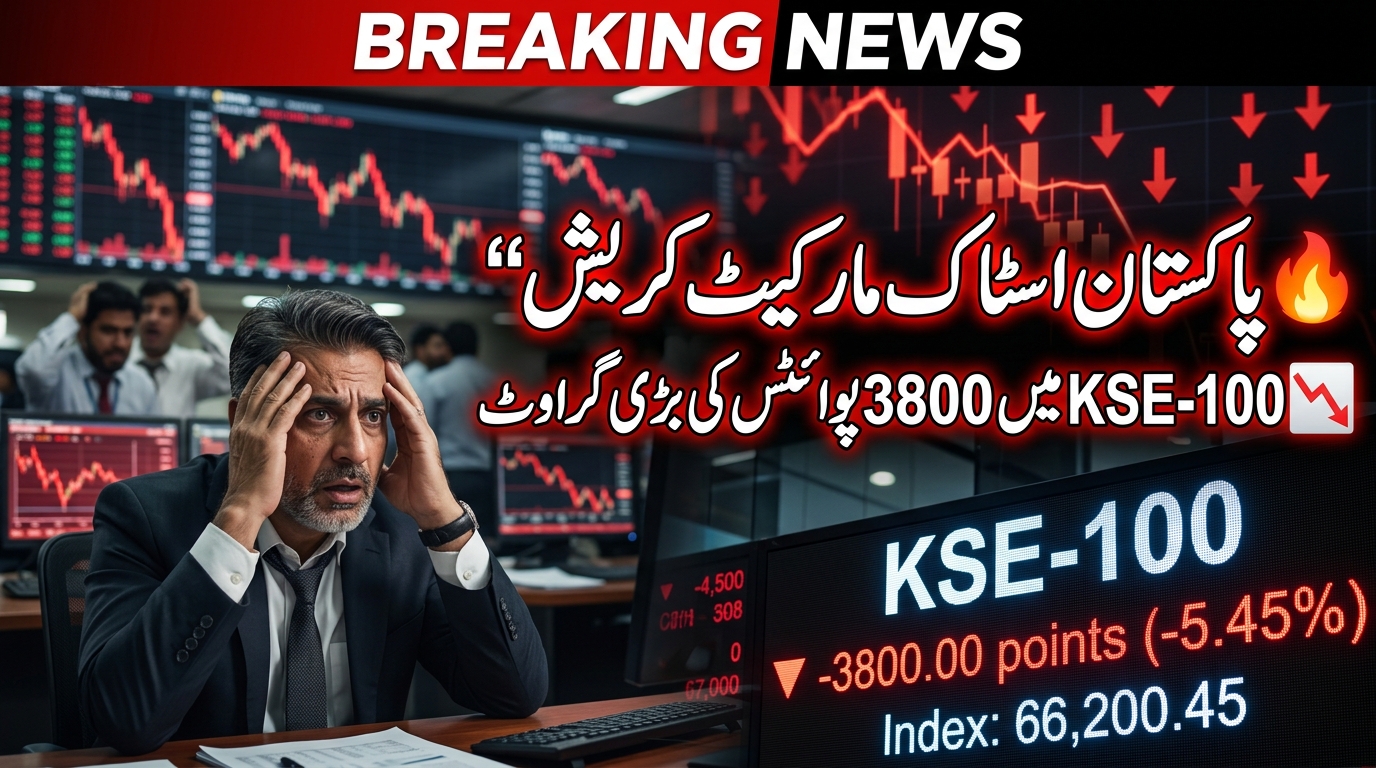
Pakistan stock market crash 2026 shocked investors as the Pakistan Stock Exchange (PSX) experienced a massive decline, with the KSE-100 Index falling more than 3,800 points in a single trading session. This sudden drop created panic in financial markets and raised concerns about short-term economic stability in Pakistan.
This decline affected investor confidence at both local and international levels. Trading activity showed heavy selling pressure across almost all major sectors, indicating that the downturn was not limited to a specific industry but rather a broad market reaction.
Also read:
U.S Iran Ceasefire 2026 Faces Strain Amid Israeli Strikes in Lebanon | Breaking News
What Happened in the Stock Market?
On the day of the crash, the market opened with a negative sentiment and continued to fall throughout the trading session. The selling pressure intensified as the day progressed, especially in blue-chip companies and high-volume stocks.
The continuous decline of KSE-100 Index indicated that investors were reacting strongly to external global factors rather than domestic corporate performance alone.
By the end of the session, the market had lost thousands of points, and trading volumes showed signs of panic liquidation from short-term investors.
Major Causes of the Market Crash
1. Geopolitical Tensions in the Middle East
One of the biggest triggers behind the crash was the ongoing instability in the Middle East region. Conflicts, diplomatic uncertainty, and security concerns created fear in global financial markets.
Since emerging markets like Pakistan are sensitive to international developments, foreign investors quickly reduced their exposure, leading to increased selling pressure.
2. Uncertain Ceasefire and Global Risk Sentiment
The unclear situation regarding ceasefire agreements and regional peace efforts added further uncertainty. Investors typically avoid risk during such conditions and shift funds toward safer assets like gold, US dollars, and government bonds.
This global “risk-off” sentiment negatively impacted stock markets worldwide, including Pakistan.
3. Panic Selling by Local Investors
A major contributor to the crash was emotional and panic-based selling. As soon as the index started falling rapidly, many retail investors rushed to exit their positions to avoid further losses.
This behavior created a chain reaction, where falling prices led to more selling, which further accelerated the decline.
4. Economic Weakness and Inflation Pressure
Pakistan’s ongoing macroeconomic challenges also played a role in weakening market sentiment. High inflation, currency pressure, and uncertainty regarding fiscal policies have made investors cautious.
These economic factors reduce corporate profitability expectations, which ultimately impacts stock valuations.
5. Foreign Investor Outflows
Foreign portfolio investors also reduced their exposure due to global uncertainty. Capital outflows from emerging markets often lead to additional pressure on stock indices, especially in developing economies like Pakistan.
Impact of the Crash on the Market
The crash had widespread effects on different segments of the market:
- Retail Investors: Saw sudden declines in portfolio values
- Institutional Investors: Mutual funds and pension funds faced valuation losses
- Foreign Investors: Reduced participation in PSX trading
- Banking Sector: Experienced strong volatility due to heavy weightage in index
- Energy & Cement Sectors: Also recorded significant declines
Overall sentiment turned bearish, with investors adopting a wait-and-see approach.
Market Psychology Behind the Fall
Stock markets are highly driven by psychology. When uncertainty rises, fear becomes the dominant factor. In this case, negative global news combined with local economic concerns created a strong fear environment.
Once selling begins, it often becomes self-reinforcing. This is known as a “domino effect” in financial markets, where one wave of selling triggers another.
However, experienced investors often interpret such corrections as temporary reactions rather than permanent declines.
Recovery Possibilities and Future Outlook
Despite the sharp fall, analysts believe that the market has the potential to recover if conditions stabilize.
Key factors that may support recovery include:
- Improvement in regional geopolitical stability
- Positive economic reforms by the government
- Stabilization of currency and inflation rates
- Return of foreign investor confidence
- Strong corporate earnings reports
If these conditions improve, the PSX may gradually regain lost points in the medium term.
Risk Awareness for Investors
This market crash highlights the importance of disciplined investing. Investors are advised to:
- Avoid panic selling during volatility
- Maintain a diversified portfolio
- Focus on long-term investment goals
- Stay updated with economic and global news
- Consult financial experts before major decisions
Volatility is a normal part of stock markets, and informed decisions help reduce unnecessary losses.
Frequently Asked Questions (FAQs)
1. Why did the Pakistan Stock Market crash?
The crash occurred due to Middle East tensions, global uncertainty, and panic selling among investors.
2. How much did the KSE-100 Index fall?
The index dropped by more than 3,800 points during the trading session.
3. Is this a long-term economic crisis?
Not necessarily. Market crashes are often short-term reactions to external shocks.
4. Should investors buy or sell during such crashes?
Experts usually recommend avoiding panic and focusing on long-term strategies instead of emotional trading.
5. Which sectors were hit hardest?
Banking, energy, cement, and industrial sectors were among the most affected.
Disclaimer
This article is for informational and educational purposes only and does not constitute financial, investment, or trading advice. Stock market investments carry risks, including potential loss of capital. Readers should consult a certified financial advisor before making any investment decisions. Past performance is not a guarantee of future results.