
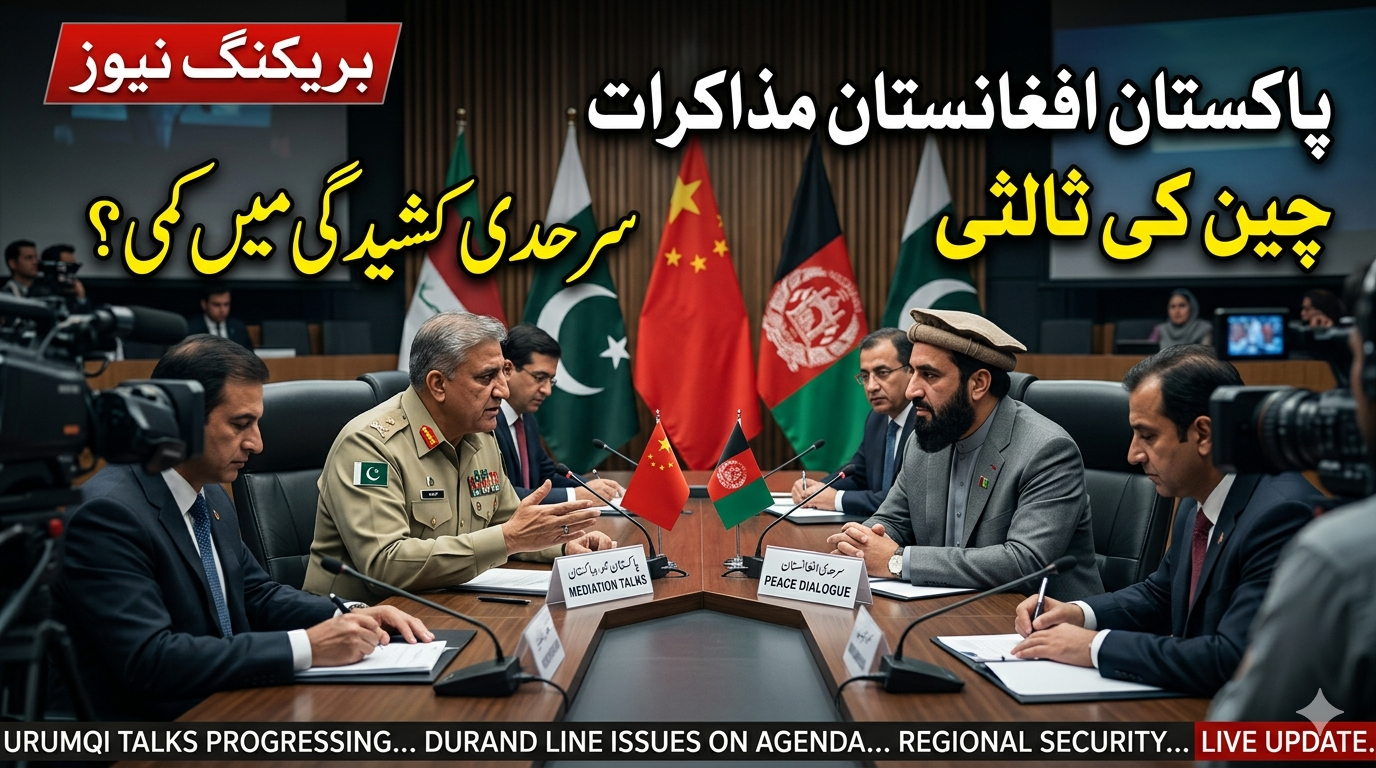
Pakistan Afghanistan Peace Talks: China’s Mediation Sparks Hope for Stability
Pakistan Afghanistan peace talks have taken center stage in April 2026 as Beijing steps in to mediate the most significant escalation between the two nations in decades. Following the “near-war” hostilities that broke out in February, the resumption of dialogue marks a critical turning point for South Asian security.
Also read:
Naseem Shah PKR 20 million Fine: PCB Record Disciplinary Action
Background of the 2026 Conflict
Relations between Pakistan and Afghanistan have historically been complex, but the situation reached a breaking point in early 2026. Following “Operation Ghazab lil-Haq,” a series of Pakistani precision strikes against militant hideouts, and subsequent Afghan retaliatory artillery fire, the region faced a humanitarian crisis. The core of the dispute remains the Durand Line, the 2,640km border that Kabul has long contested.These issues have not only affected diplomatic ties but also hindered economic cooperation, leading to a complete standstill in bilateral trade since late 2025. The current Pakistan Afghanistan peace talks represent the first coordinated effort to restore the status quo and prevent a wider regional conflagration.
China’s Strategic Role as a Mediator
In this latest development, China has hosted delegations in the city of Urumqi. By acting as a neutral and strategic mediator, China aims to protect its massive investments, particularly the Belt and Road Initiative (BRI).
Analysts believe China’s involvement is driven by a necessity to secure its western borders. Chinese Foreign Ministry spokesperson Mao Ning confirmed on April 3, 2026, that the “consultation process is being steadily implemented and advanced.” China’s “quiet diplomacy” approach provides a platform where both Islamabad and Kabul feel their sovereignty is respected, unlike previous Western-led efforts.
Key Objectives of the Peace Talks
The primary objective of these Pakistan Afghanistan peace talks is to reduce immediate military tensions and establish a framework for long-term stability. The negotiation agenda includes:
-
Strengthening Border Security: Establishing a joint monitoring mechanism to prevent unauthorized crossings.
-
Counter-Terrorism Cooperation: Addressing Pakistan’s concerns regarding the TTP and China’s concerns about the ETIM.
-
Economic Corridors: Integrating Afghanistan into the China-Pakistan Economic Corridor (CPEC) to boost trade.
-
Diplomatic Normalization: Reopening consulates and restoring full diplomatic channels severed during the February skirmishes.
Focusing on the Durand Line and Border Tensions
One of the most critical aspects of the Urumqi talks is addressing the frequent skirmishes along the Durand Line. Unauthorized drone incidents and border fencing disputes have led to hundreds of casualties over the past few months.
The talks aim to introduce a Joint Border Management System. If successful, this would allow for better coordination between the Pakistan Army and the Taliban’s border forces, potentially ending the cycle of “tit-for-tat” strikes that characterized the first quarter of 2026.
Progress and Positive Developments
Early reports from the April sessions suggest promising progress. Both countries have expressed a “willingness to resolve disputes through peaceful dialogue,” a significant shift from the escalatory rhetoric seen in March. Diplomatic sources indicate that a consensus has been reached on a “specific operational mode” for future discussions, which may include high-level ministerial meetings in Beijing later this year.
Regional and Global Impact
Stability resulting from successful Pakistan Afghanistan peace talks is crucial for the broader South and Central Asian regions. A peace treaty would likely lead to:
-
Increased Regional Trade: Resuming the flow of goods through the Torkham and Chaman borders.
-
Enhanced Connectivity: Potential rail links connecting Uzbekistan to Pakistani ports via Afghanistan.
-
Global Energy Security: Re-starting stalled projects like the TAPI (Turkmenistan–Afghanistan–Pakistan–India) gas pipeline.
Such developments would shift the global perception of the region from one of perpetual conflict to one of emerging economic potential.
Frequently Asked Questions (FAQs)
Q1: Where are the Pakistan Afghanistan peace talks being held?
A: The current 2026 talks are being hosted in Urumqi, China, with oversight from the Chinese Foreign Ministry.
Q2: What is the main purpose of these talks?
A: The main goal is to de-escalate the “near-war” border conflict and address the presence of cross-border militant groups.
Q3: Why is China involved in these talks?
A: China seeks to protect its Belt and Road Initiative investments and ensure regional stability on its western border.
Q4: Have the talks been successful so far?
A: Yes, initial reports indicate a “steady advancement” in negotiations and a mutual agreement to continue the dialogue process.
Professional Source:
For more details, you can refer to the latest Reuters coverage on Pakistan–Afghanistan peace talks.