
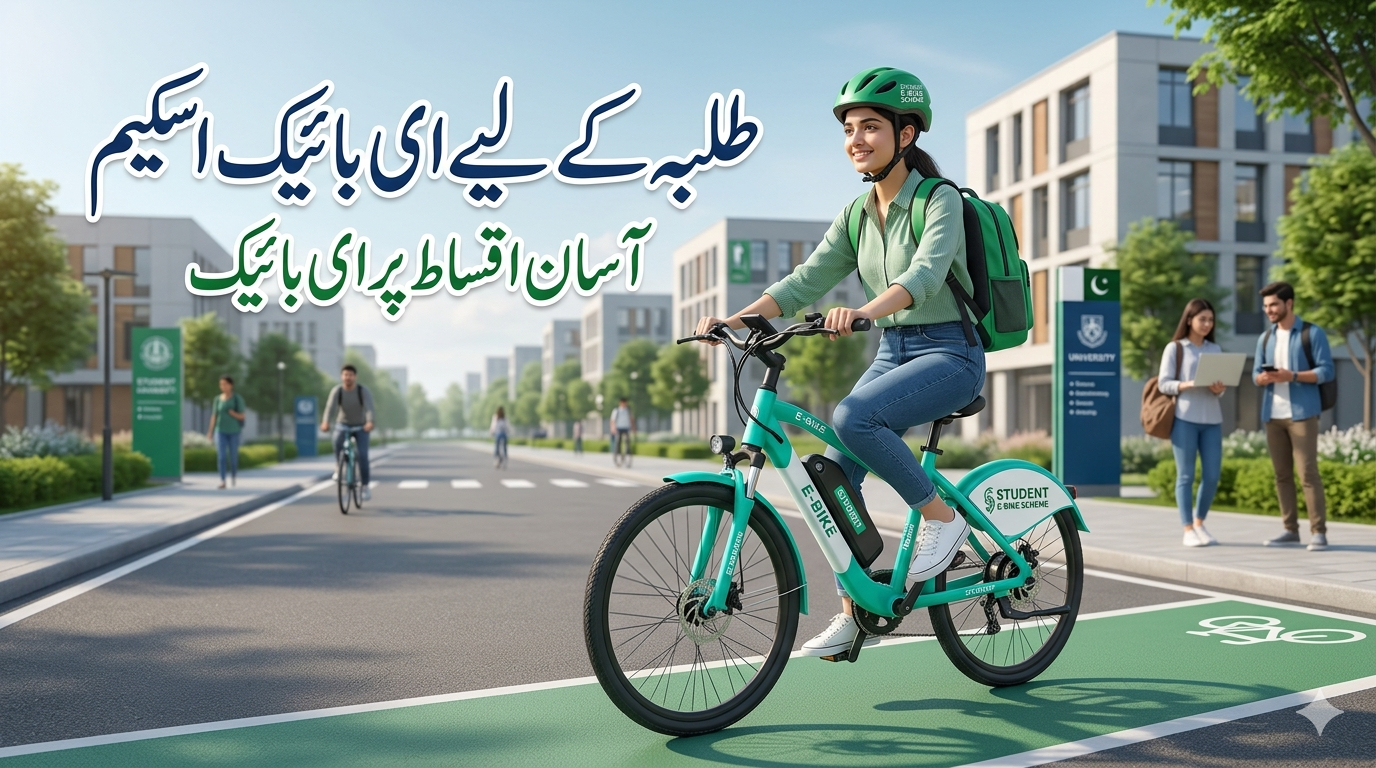
E-Bike Scheme for Students: A Step Towards Affordable and Eco-Friendly Transportation
Introduction
The E-Bike Scheme for Students has emerged as a promising initiative aimed at solving transportation challenges faced by students across Pakistan. With rising fuel prices and increasing commuting costs, many students struggle to travel daily to their educational institutions. This scheme introduces electric bikes as an affordable, eco-friendly, and efficient alternative, helping students save money while promoting sustainable mobility.
The E-Bike Scheme for Students Pakistan is a government initiative aimed at providing electric bikes to students for easy commuting and reducing transportation costs.
Governments and educational authorities are increasingly focusing on such initiatives to support youth and reduce environmental impact, making this scheme a significant step toward a greener future.
Also read :
Fakhar Zaman Ban PSL 2026: PCB Confirms Suspension After Ball Tampering Controversy
Objectives of the E-Bike Scheme
The primary objective of the E-Bike scheme is to provide students with a cost-effective and reliable mode of transport. Electric bikes not only reduce fuel expenses but also help minimize carbon emissions, contributing to environmental protection.
Another important goal is to empower students, especially those from middle and low-income families, by improving their access to education. With easy mobility, students can attend classes regularly without worrying about transportation issues.
For more insights on electric mobility trends, visit:
https://www.iea.org/reports/global-ev-outlook-2024
Key Features of the Scheme
The E-Bike scheme offers several attractive features that make it accessible and beneficial for students. These include subsidized pricing, easy installment plans, and minimal markup rates. In many cases, the government collaborates with banks to provide interest-free or low-interest loans.
Additionally, the bikes are designed with modern technology, including rechargeable batteries, low maintenance costs, and efficient performance. Charging stations are also being planned in various cities to support users.
Such features ensure that the scheme is not only affordable but also practical for everyday use.
Environmental Benefits
One of the most significant advantages of the E-Bike scheme is its positive impact on the environment. Unlike traditional fuel-based vehicles, electric bikes produce zero emissions, helping reduce air pollution in urban areas.
This initiative aligns with global efforts to combat climate change and promote clean energy solutions. By encouraging students to adopt eco-friendly transport, the scheme plays a vital role in building awareness about environmental responsibility among the younger generation.
Financial Relief for Students
Rising fuel prices have made commuting increasingly expensive for students. The E-Bike scheme addresses this issue by offering a budget-friendly alternative. With electric bikes, students can significantly reduce their daily travel expenses.
Moreover, flexible payment plans make it easier for students to afford these bikes without putting a financial burden on their families. This financial relief can allow students to focus more on their education rather than worrying about transportation costs.
Impact on Education and Accessibility
Access to reliable transportation directly affects students’ academic performance. Long and difficult commutes can lead to fatigue, absenteeism, and decreased productivity.
By providing an efficient transport solution, the E-Bike scheme ensures that students can reach their institutions on time and with ease. This improved accessibility can lead to better academic outcomes and increased participation in extracurricular activities.
Government and Institutional Support
The success of the E-Bike scheme largely depends on strong support from the government and educational institutions. Authorities are working to expand the scheme to more cities and universities, ensuring maximum reach and impact.
Partnerships with financial institutions and private companies are also being developed to improve the availability and affordability of electric bikes. This collaborative approach is essential for the long-term success of the initiative.
Challenges and Future Outlook
Despite its many benefits, the E-Bike scheme faces certain challenges. These include limited charging infrastructure, awareness gaps, and initial implementation hurdles. However, with proper planning and investment, these challenges can be overcome.
Looking ahead, the future of the E-Bike scheme appears promising. As technology advances and awareness increases, more students are likely to adopt electric bikes, making them a common mode of transportation in the coming years.
Conclusion
The E-Bike Scheme for Students is a forward-thinking initiative that addresses multiple issues, including high transportation costs, environmental concerns, and accessibility challenges. By providing an affordable and sustainable transport option, the scheme empowers students and supports their educational journey.
As the program expands and improves, it has the potential to transform student mobility across Pakistan, contributing to both economic relief and environmental sustainability.
FAQ (Frequently Asked Questions)
Q1: What is the E-Bike Scheme for Students?
It is a government-supported initiative that provides electric bikes to students at subsidized rates or easy installments.
Q2: Who is eligible for the scheme?
Eligibility usually includes students enrolled in recognized colleges or universities (criteria may vary).
Q3: Are the bikes available on installments?
Yes, most schemes offer easy monthly installment plans with low or zero interest.
Q4: What are the main benefits of e-bikes?
Low cost, zero fuel expense, eco-friendly, and easy maintenance.
Q5: Is charging infrastructure available?
Charging facilities are being developed in major cities, and bikes can also be charged at home.
Disclaimer
This article is for informational purposes only. Details of the E-Bike scheme may vary depending on government policies and official announcements. Readers are advised to verify information from official government websites or authorized institutions before applying.