
Wheat Crisis in Pakistan 2026: Farmers Hit Hard as Prices Crash
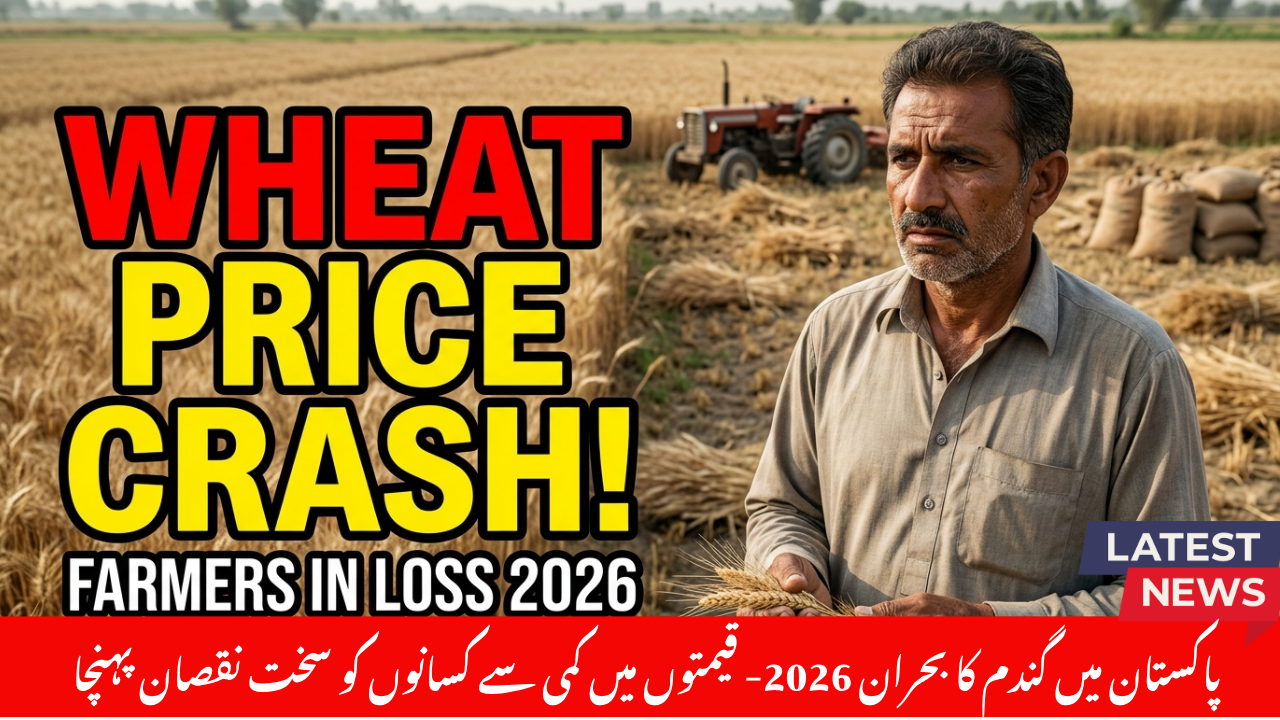
The wheat crisis in Pakistan 2026 has become a serious challenge for farmers across the country. Wheat prices have dropped sharply in many regions, falling close to Rs. 2000 per 40kg. This is far below production costs, causing heavy financial losses for farmers.
Also read:
PSL 2026 Points Table Today – Latest Standings, Rankings, Playoff Race & Team Analysis
Wheat is one of Pakistan’s most important staple crops. It supports food supply, rural income, and national food security. When wheat prices fall, the impact spreads across the entire agricultural economy.
Wheat Crisis in Pakistan 2026 and Its Main Causes
The ongoing wheat crisis in Pakistan 2026 is the result of multiple economic and policy issues.
1. Oversupply in the Market
A strong harvest season increased wheat supply. However, demand remained stable, leading to price drops.
2. Weak Government Procurement
Government agencies failed to purchase enough wheat at support price. Farmers were forced to sell at lower market rates.
3. Rising Farming Costs
Fertilizer, diesel, seed, and labor costs increased significantly in 2026. This reduced profit margins for farmers.
4. Middlemen Pressure
Middlemen often buy wheat at low prices from farmers and resell it at higher rates, reducing farmer earnings.
5. Import Policy Effects
Previous wheat imports and inconsistent policies created pressure on local wheat prices.
Impact of Wheat Crisis in Pakistan 2026 on Farmers
The wheat crisis in Pakistan 2026 has directly affected farmers’ livelihoods.
- Farmers are selling wheat at a loss
- Production cost recovery is difficult
- Agricultural loans are increasing
- Rural poverty is rising
- Many farmers are shifting to other crops
Small farmers are the most affected because they lack financial reserves.
Economic Effects of Wheat Crisis in Pakistan 2026
The impact of the crisis goes beyond farming.
Food Security Risk
A decline in wheat production may increase future dependency on imports.
Inflation Pressure
Flour prices may rise in the long term despite current low farm prices.
Rural Economic Slowdown
Reduced farmer income is affecting rural markets and employment.
Government Response to Wheat Crisis in Pakistan 2026
Authorities have introduced support prices, but implementation remains weak.
Farmers demand:
- Immediate wheat procurement at support price
- Subsidies on fertilizers and fuel
- Transparent market system
- Action against middlemen exploitation
Future Outlook of Wheat Crisis in Pakistan 2026
If the wheat crisis in Pakistan 2026 continues:
- Wheat cultivation may decline
- Farmers may switch to alternative crops
- Food import dependency may increase
- Rural economic stress may grow
Strong policy reforms are needed to stabilize the market.
Official Website
Ministry of National Food Security & Research, Pakistan
https://www.mnfsr.gov.pk/
-
FOLLOW UPS FOR MORE UPDATES:
Whatsapp:
FAQs – Wheat Crisis in Pakistan 2026
1. What is wheat price in Pakistan 2026?
Around Rs. 2000–2500 per 40kg in many regions.
2. Why is wheat crisis in Pakistan 2026 happening?
Due to oversupply, weak procurement, and high production costs.
3. Are farmers suffering losses?
Yes, most farmers are facing major losses.
4. What is support price of wheat?
Around Rs. 3500 per 40kg (varies by policy).
5. Which areas are most affected?
Punjab and Sindh are heavily affected.
6. What is main issue in wheat crisis in Pakistan 2026?
Price instability and poor procurement system.
7. Can wheat prices recover?
Yes, with strong government intervention.
8. How does it affect consumers?
It may increase future flour prices.
9. Why are middlemen important?
They influence pricing between farmers and markets.
10. What is solution to wheat crisis in Pakistan 2026?
Better procurement, subsidies, and market reforms.
Conclusion
The wheat crisis in Pakistan 2026 highlights deep structural problems in the agriculture sector. Falling prices have placed heavy pressure on farmers, reducing income and increasing uncertainty. Without urgent reforms, Pakistan may face long-term risks to food security and rural stability.
Disclaimer
This article is for informational purposes only. Market prices may vary by region and time. Readers should check official updates before making decisions.
1 thought on “Wheat Crisis in Pakistan 2026-Farmers Hit Hard as Prices Crash to Rs. 2000”